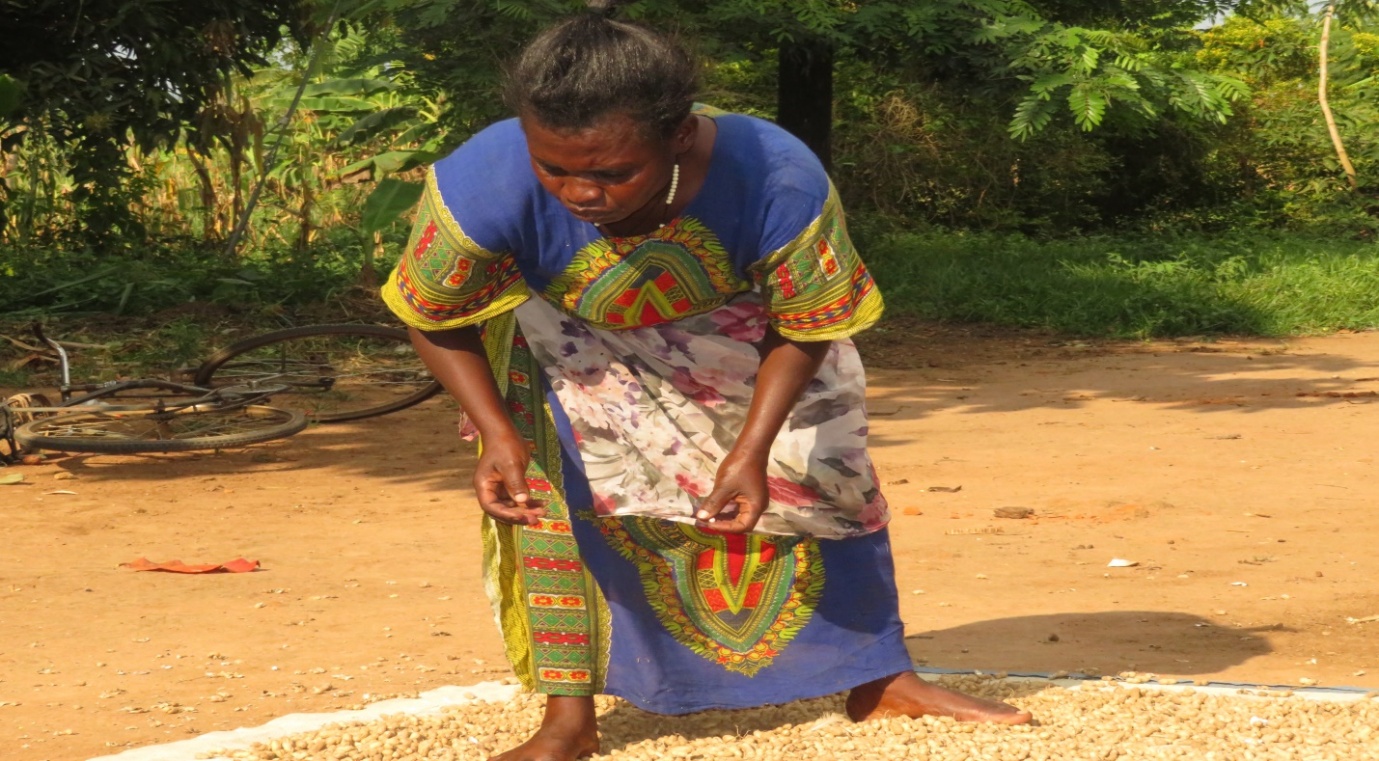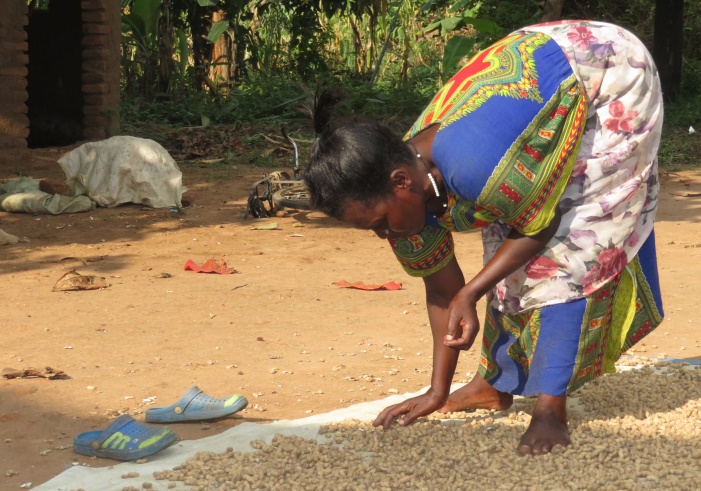
For Kyozira Betty, farming became an increasingly important source of livelihood after she spent a long period teaching at a nursery school without pay.
Before participating in the AMUKA initiative, Betty mainly grew rice and cassava. She had limited knowledge of groundnut production and modern farming practices, and her harvests were often barely sufficient for household consumption.
In 2025, Betty participated in a farmer training programme organised by the AMUKA team. She learned improved agronomic practices, including land preparation, timely planting, correct spacing, pest and disease management, harvesting and post-harvest handling. She also accessed 40 kilograms of groundnut seed and was encouraged to work together with other farmers.
Betty applied the knowledge she had gained and expanded her groundnut garden to one acre. During the first season after adopting the improved practices, she harvested nine bags of groundnuts — her yields more than doubled.
The increased production enabled her to sell a significant portion of the harvest while retaining enough groundnuts for household consumption and seed for the following planting season.
Betty has since become a model farmer in her community. She shares practical knowledge with other farmers, including techniques for improved groundnut production, drying groundnuts on tarpaulins and safe storage to maintain grain quality.
Her experience has encouraged neighbouring households to consider improved groundnut farming as a pathway towards increased income and food security.
Betty's story highlights the importance of combining quality seed, farmer training and organised farmer groups in strengthening smallholder agricultural production.
Results at a Glance
Measurable outcomes reported from this beneficiary's experience