
UGAD works to improve the quality of life of vulnerable and underserved communities through programmes designed to address the root causes of poverty and inequality — combining economic empowerment, institutional development, strategic partnerships and evidence-based programming. Working alongside communities and development partners, we deliver practical initiatives that contribute to Uganda's national development priorities and the Sustainable Development Goals (SDGs).
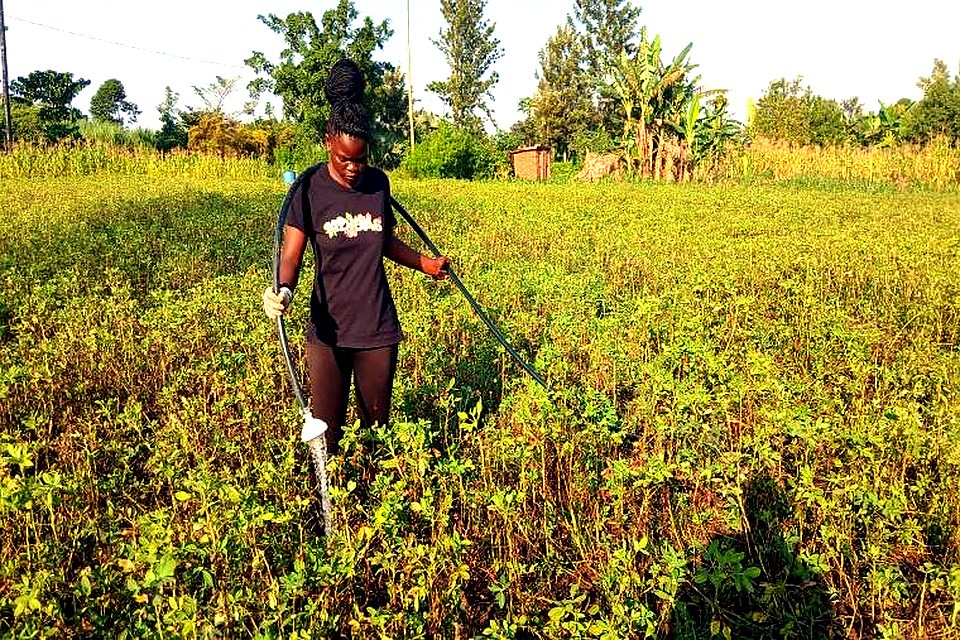
Women's participation is essential to sustainable development. Across our programmes, women farmers are supported to increase agricultural productivity, access quality inputs and take a leading role in household and community decision-making.
Empowered women contribute significantly to stronger households, better nutrition and more resilient communities.
Explore Our ProjectsSupporting individuals, families and groups to identify opportunities, strengthen local leadership and build resilience — so development remains sustainable beyond project support.
Promoting income-generating opportunities through agriculture, agribusiness, skills development, entrepreneurship, financial inclusion, savings and market linkages.
Working with community organisations, cooperatives and farmer groups to strengthen governance, leadership, financial management and organisational effectiveness.
Building partnerships with government, development partners, faith and civil society organisations, financial and academic institutions and the private sector.
Developing high-quality projects that meet community needs and donor standards — through proposal development, grant acquisition and institutional fundraising.
Integrating MEAL into every stage of implementation to measure results, improve quality, strengthen accountability and demonstrate impact.
Improved agricultural practices, seed multiplication, farmer training, value addition, climate-smart agriculture and market access — improving food security while increasing household incomes.
Entrepreneurship development, small business support, financial literacy, savings mobilisation and income diversification — creating sustainable pathways out of poverty.
Skills development, entrepreneurship, leadership training, employment readiness, innovation and mentorship — empowering young people as catalysts for national development.
Advancing women's leadership, economic participation, financial inclusion, business development and decision-making for stronger, more resilient communities.
Community mobilisation, social inclusion, institutional strengthening, local governance, capacity building and volunteer mobilisation.
Promoting ethical leadership, institutional governance, accountability, transparency, community participation and responsible stewardship.
Sustainable development is achieved when empowered communities, strong institutions and strategic partnerships work together to address the underlying causes of poverty and vulnerability.
Every programme starts with meaningful engagement to understand community priorities, challenges and aspirations.
Through training, mentorship and technical support, communities are equipped to manage their own development.
We bring together financial resources, technical expertise and partnerships to support community-led initiatives.
Projects improve livelihoods and create opportunities using approaches that are inclusive and financially sustainable.
MEAL systems help us measure outcomes, capture lessons and continuously improve programme quality.
The result: stronger institutions, empowered communities and sustainable outcomes that outlast individual projects.
Understanding local realities, challenges and opportunities directly with communities.
Engaging community members as active participants in shaping solutions.
Developing practical, locally-relevant interventions that respond to identified priorities.
Securing the financial, technical and institutional support needed to deliver.
Delivering interventions in close partnership with communities and stakeholders.
Tracking results, capturing lessons and strengthening accountability.
Adapting and improving programme quality based on evidence.
Ensuring benefits continue long after external support has ended.
Achieving sustainable development requires collaboration. Work with us to design and implement solutions that transform lives across Uganda.